
Blog
The Timeless Beauty of Rajasthani Traditional Prints
Sep
Rajasthan, the land of kings, is not only known for its forts, palaces, and deserts but also for its rich textile heritage. Among the many treasures of this region, the traditional prints of Rajasthan hold a special place. These prints have been practiced for centuries, blending history, culture, and artistry into fabrics that tell stories of their own.
1. Bagru Prints
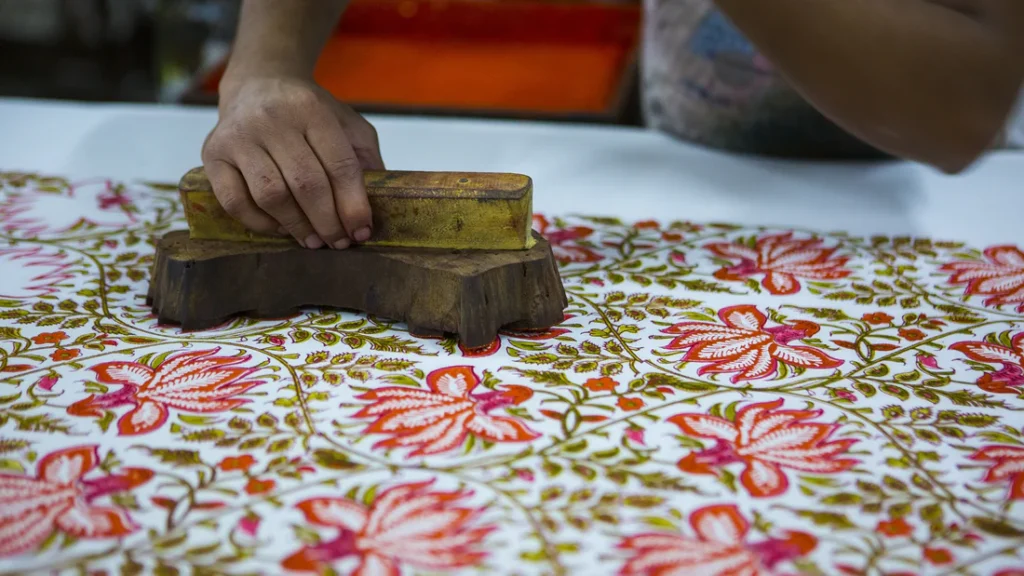
Bagru, a small town near Jaipur, is famous for its hand-block printing technique using natural dyes. Artisans carve intricate designs on wooden blocks, dip them in vegetable dyes, and stamp them on fabric. The result is an earthy, rustic charm that reflects Rajasthan’s bond with nature.
2. Sanganeri Prints
Originating from the town of Sanganer, these prints are known for their delicate floral patterns and use of bright colors on white or pastel backgrounds. Sanganeri prints are often seen on lightweight cotton sarees, perfect for India’s warm climate.
3. Leheriya
Leheriya is a traditional tie-dye technique that creates wave-like diagonal stripes. It is usually crafted in bright colors like red, yellow, blue, and green, symbolizing joy and festivity. Leheriya dupattas and sarees are still a popular choice during Rajasthani festivals.
4. Bandhani (Bandhej)
Bandhani, also known as Bandhej, is one of the oldest tie-dye traditions of India. The fabric is tied into small knots and dyed to create intricate patterns like dots, waves, and spirals. Bandhani sarees, especially in red and maroon, are considered auspicious for weddings and ceremonies.
5. Dabu Prints
Dabu is an ancient mud-resist printing technique where artisans use a mixture of clay, gum, and sawdust to block parts of the fabric before dyeing. The final fabric has a unique texture and character, making each piece truly one of a kind.
Why Rajasthani Prints Are Special
- They are handcrafted by skilled artisans using age-old techniques.
- Natural dyes and sustainable processes make them eco-friendly.
- Each piece is a reflection of Rajasthan’s vibrant culture and traditions.
